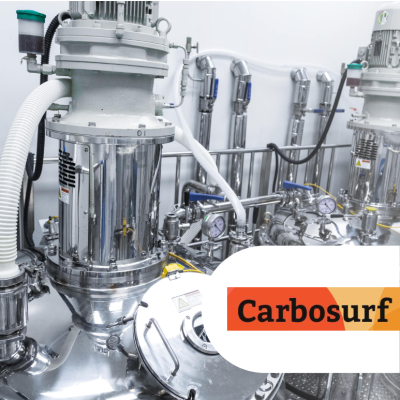
Between 2015 and 2018, the CBE JU-funded CARBOSURF research and innovation project brought together industry and academia to solve a stubborn bottleneck in the bioeconomy: how to make biosurfactants and specialty carbohydrates by fermentation, at a scale and cost that could compete on the open market. Coordinated by Ghent University (Belgium), the project developed new microbial strains along with fermentation and purification processes for biosurfactants such as rhamnolipids, as well as for complex sugars including human milk oligosaccharides (HMOs). These were validated at pilot scale at the Bio Base Europe Pilot Plant.
The validation proved decisive. After the project ended, two of its partners, Evonik, a leading global chemical company, headquartered in Essen (Germany), and Inbiose from Belgium, have each turned pilot-scale science into full industrial production, backed by fresh private investment that the EU-funded groundwork helped unlock.
Evonik: from pilot to a factory in Slovakia

For Evonik, CARBOSURF's work resolving bottlenecks in rhamnolipid fermentation at pilot scale was the springboard for a triple-digit-million-euro investment in the world's first industrial-scale rhamnolipid plant, built at the company's long-standing fermentation site in Slovenská Ľupča, Slovakia. Construction began in 2022, and the plant was opened in May 2024.
The facility converts corn-derived sugar into fully biodegradable rhamnolipid biosurfactants, replacing the fossil-based and tropical-oil-derived surfactants commonly used in shampoos, detergents and other personal and home care products. Early applications have already reached the market. RHEANCE® One, Evonik's cosmetic-grade rhamnolipid, has won industry’s trust. The company has since introduced rhamnolipid-based products for oral care and, under the TEGO® Wet Terra brand, as a sustainable wetting agent for paints and coatings.
The Slovak site, Evonik Fermas, employs more than 260 people and serves as Evonik's scale-up and market-launch platform for all its major biotechnological products. Its success has since attracted further investments. In 2026, Evonik announced an additional €80 million expansion of biotechnology capacity at the same site, this time to support pharmaceutical-grade fermentation, creating around 50 further jobs.
Inbiose: turning pilot science into a growing ingredients business

CARBOSURF also helped Inbiose, a Ghent University spin-off, overcome fermentation and downstream-processing bottlenecks for complex HMOs, the sugars naturally found in human breast milk. This work supported the company's transition from pilot to industrial manufacturing under its proprietary GlycoActive™ platform.
Inbiose now commercially produces a portfolio of six HMOs. It has obtained novel food approval from the European Food Safety Authority and regulatory clearance in overseas markets such as Canada. Its ingredients are sold globally for use in infant formula, dietary supplements, food and beverages, and pet nutrition, contributing to supporting gut, immune and metabolic health. The company's platform today spans a library of more than 70,000 strains and 2,000 enzymes, with external production providing large-scale industrial fermentation capacity.
Since CARBOSURF concluded, Inbiose has continued to attract capital to fund this growth, including a €15 million venture debt facility from the European Investment Bank. This has taken the company's total funding to around €40 million and grown its team to some 60 people at the Ghent technology park headquarters.
A launchpad for bio-based industry
The early-stage CBE JU support has helped leverage well over €150 million in follow-on investment, hundreds of new jobs in Belgium, Germany and Slovakia, and biodegradable, bio-based products that are now on supermarket and pharmacy shelves worldwide.