When the EMBRACED project set out to recycle Absorbent Hygiene Products (AHPs) - nappies, feminine hygiene products and incontinence pads - it was tackling a waste stream long considered unrecyclable. Europe generates around 8.5 million tonnes of AHP waste each year, almost all of it incinerated or landfilled.
EMBRACED proved that this waste could instead be turned into bio-based materials, fertilisers and bioplastic through an innovative biorefinery process.
The project's impact reached well beyond the pilot plant. By demonstrating a circular economy model at industrial scale, EMBRACED gave the Italian government a clear, workable blueprint for scaling up bio-based industry, and the government acted on it.
A catalyst for national investment

Italy's National Recovery and Resilience Plan has since allocated more than €109 million to build 11 new biorefineries across the country, extending the EMBRACED model to new regions and waste streams. The first of these biorefineries was inaugurated in Treviso in July 2025.
The €109 million allocation for biorefineries is expected to have a transformative impact by expanding biorefinery infrastructure, scaling up the EMBRACED model to recycle various waste streams, and diversifying bio-based production (biofuels, bioplastic, biomaterials). By supporting biorefineries, the Italian government aims to boost industrial innovation, attract investments, and improve the country’s competitiveness in green technologies.
Marco Mattiello, EMBRACED project representative
Technology that kept advancing
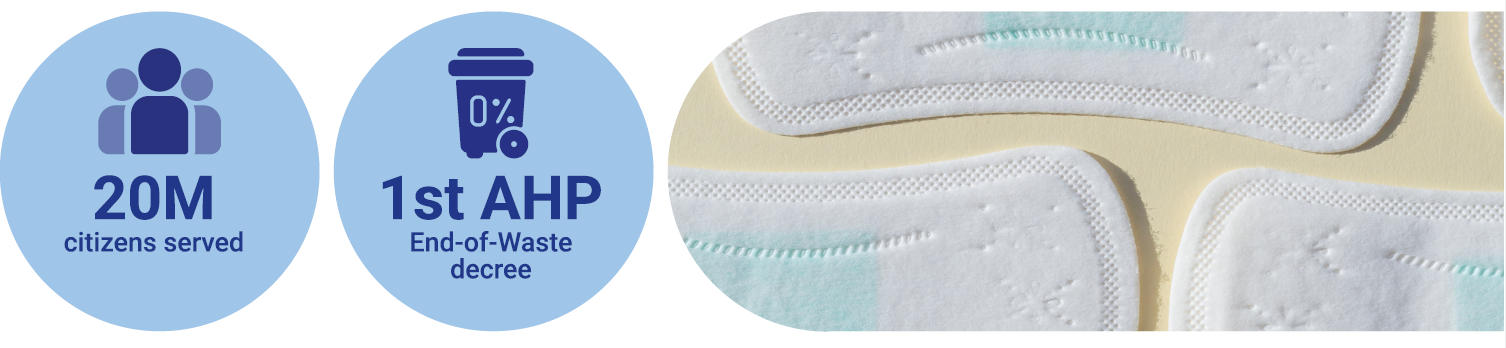
EMBRACED's success also laid the groundwork for further innovation. i-Foria, the technology supplier, built on its results, refining the pre-treatment process that separates cellulose, plastic and polymer from AHP waste. Thanks to this progress, Italy has rolled out a source-segregated AHP collection system serving 20 million citizens. The country has also adopted the world's first AHP End-of-Waste decree (a regulation setting out when recycled waste can legally be treated as a normal product), positioning the country as a European frontrunner in this niche of the circular economy.
The next step in advancing the circular bioeconomy is to expand the EMBRACED biorefinery concept to encompass all urban bio-waste and to implement additional technological innovations that further enhance the value of secondary raw materials derived from both AHP upcycling and biowaste.
Marcello Somma, founder of i-Foria and holder of key technology patents
Why it matters for Europe
By reducing dependence on fossil fuels and imported raw materials, projects like EMBRACED show how biorefineries can strengthen Europe's resilience and energy independence while creating jobs in biotechnology, waste management and manufacturing in the regions where they are built. With its potential for replication and further investment, EMBRACED embodies what CBE JU funding is designed to achieve for Europe's bioeconomy.