Publication date:
From nutritious food ingredients and sustainable animal feed to bio-based materials and cosmetics, algae are the source of an expanding range of products, positioning them as one of Europe's most promising renewable resources. Fast-growing and highly productive, micro and macroalgae can be cultivated without relying on agricultural land and, in many cultivation systems, with limited freshwater use, making them a versatile feedstock for a circular bioeconomy.
For billions of years algae have played an important role, transforming the Earth’s atmosphere through oxygen-production and helping create the conditions that allow life as we know it. Over geological time, algae also contributed to the organic matter that eventually became some of the fossil resources we rely on today. Now, as Europe seeks alternatives to these finite resources, algae are once again emerging as a remarkable ingredient for a more sustainable economy.
Microalgae and seaweed can produce valuable proteins, lipids, pigments, carbohydrates and other valuable compounds, creating opportunities in sectors ranging from food and feed to cosmetics, chemicals and energy. Their ability to grow in diverse environments, often without competing directly for arable land, further adds to their potential. This versatility offers an opportunity to rethink how we produce some of the materials and resources we rely on today.
Building a competitive European microalgae industry
Through CBE JU projects, researchers and industry partners are developing new ways to cultivate and transform algae into high-value products and tackle the technological, economic and market barriers that have so far limited large-scale deployment. Here are some of the projects driving that transformation!
SCALE, led by the French SME Microphyt, inaugurated the world's first industrial-scale microalgae biorefinery, located in Baillargues, southern France in July 2025. The flagship facility is now producing around 100 tonnes per year of natural active ingredients for the health, nutrition, cosmetics and animal feed sectors. Beyond its production output, the project has created around 40 direct jobs and 200 indirect jobs, strengthening Europe's position in a global algae industry that has, until now, remained a largely niche, high-value market. The biorefinery marks a major milestone for Europe's bio-based sector, demonstrating how CBE JU support can de-risk breakthrough innovations and bring them to industrial scale.
The ALLIANCE project is working to transform four separate microalgae processing pipelines into 15 near-zero-waste product lines developing a circular multi-product biorefinery for microalgae. Using solvent-free extraction processes maximises resource efficiency while producing ingredients for food, aquafeed, agriculture and cellular agriculture. The project aims to cut costs and environmental impact by recirculating water and prioritising renewable energy. Its ambitions include the launch of 19 new ingredients and 12 product prototypes, and closer engagement with regulators and the public to build trust in algae-based products across the EU market.
Microalgae have enormous potential as a versatile and sustainable feedstock for a wide range of applications. Through ALLIANCE, we are working to unlock this potential by developing circular, near-zero-waste processing routes that can transform microalgae into valuable ingredients for multiple sectors.
Iago Dominguez Teles, Research Manager, Wageningen University & Research, ALLIANCE Coordinator
Unlocking the value of seaweed
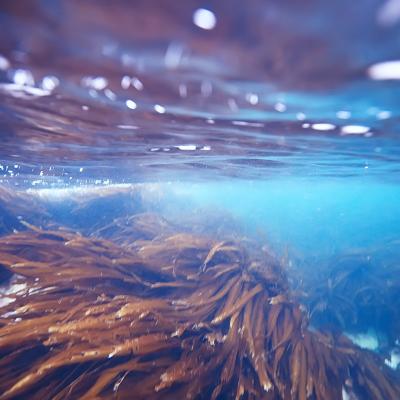
Macroalgae, commonly known as seaweed, also offer enormous potential for Europe's bioeconomy.
The recently launched BIG-ALGAE project is developing innovative cultivation systems capable of converting seaweed into ingredients for food, feed, cosmetics, textiles and bio-based packaging. The project combines offshore and land-based cultivation approaches with advanced processing technologies to demonstrate sustainable value chains at industrial scale. With the aim of improving and upscaling four cultivation technologies for five native European macroalgae species (Porphyra spp., Gracilaria spp., Chondrus crispus, Palmaria palmata and Saccharina latissima), the project seeks to expand the options available for sustainable macroalgae cultivation.
Our project aims to provide new tools, strains, seeds and methodologies to support the development of the macroalgae sector in Europe, guiding the development of current producers and boosting the appearance of new ones.
Rui Pereira, Director of A4F’s Centre for Innovation in Macroalgae, BIG-ALGAE project
Similarly, SALINA is establishing demonstration sites across several European marine regions to validate scalable macroalgae cultivation in integrated coastal biorefineries. Beyond producing high-value products for food, cosmetics and biomaterials, the project seeks to strengthen coastal economies and improve Europe's resilience in algae production.
SALINA is helping build a thriving European blue bioeconomy, turning macroalgae cultivation and integrated biorefineries into a source of new high-value products, while strengthening coastal economies across Europe.
Cristina Viera, ASINCAR R&D&I Project Manager, SALINA project
Alternative proteins for a more sustainable food system
Algae can also play an important role in Europe's protein transition. The EU Protein Action Plan, adopted by the European Commission last July, aims to strengthen sustainable EU protein supply, reduce strategic dependencies and diversify protein sources for food and feed. CBE JU-funded projects are already contributing to these objectives by developing algae-based proteins and valorising underused biomass and marine side streams into high-value food and feed ingredients.
ALEHOOP demonstrated pilot-scale biorefineries capable of recovering proteins from seaweed and legume processing side streams. By developing new functional proteins for food and feed applications, the project contributed to reducing Europe's dependence on imported protein sources and created new value from underutilised biomass.
PROMISEANG is developing novel proteins from underexploited marine sources with a particular focus on algae (both macro and micro) discards, alongside marine invertebrate and industrial biowaste by-products, using fermentation with fungi, yeast or bacteria. The project is working to demonstrate a technically and economically viable biorefinery that converts residual algae biomass into high-quality microbial protein. It is also taking a zero-waste approach that recovers non-protein compounds for food, feed and non-food applications such as pharmaceuticals and cosmetics. By profiling more than 30 types of marine biowaste and by-products and validating fermentation processes on at least ten of them, PROMISEANG aims to unlock a new source of algae-based protein.
In terms of impact, our work directly addresses the EU's urgent need to reduce reliance on imported proteins by valorising underexploited marine biomass, a critical move for food sovereignty. PROMISEANG is demonstrating that Europe can turn its marine biowaste into a strategic asset, transforming discarded algae into high-quality proteins while fully valorising side streams for a truly zero-waste circular bioeconomy.
Prof. Jesus Simal-Gandara, IP and research coordinator of the project from UVigo
ALGANOVA is developing an algae-based biorefinery that feeds on agro-marine by-products and industrial CO₂ to cultivate high-protein microalgae biomass. The project targets a 15% increase in biomass productivity, a 20–25% cut in energy consumption through digital optimisation, and protein production costs as low as €3–4/kg, making algae protein more competitive with plant-based alternatives. By upcycling up to 95% of agro-marine by-products and absorbing an estimated 200 tonnes of biogenic CO₂ per year, ALGANOVA supports the EU's drive to reduce its reliance on imported protein ingredients.
ALGANOVA ambitions to change how Europe produces protein. By converting agro-marine by-products and industrial biogenic CO₂ into protein-rich microalgal biomass, we are building a more sustainable, circular alternative to traditional and imported protein ingredients.
Lila Otero-Gonzalez, Team Leader & ALGANOVA’s Project Coordinator
Turning algae into a resource for the future
As demand grows for sustainable raw materials that do not compete with food production or agricultural land, algae are expected to play an increasingly important role in a circular and competitive bioeconomy. By developing algae-based proteins and other high-value products, these projects contribute to EU priorities on protein resilience and strategic autonomy, while demonstrating the potential of Europe’s marine and aquatic resources to support a sustainable and competitive blue bioeconomy.
This contribution extends beyond protein security, highlighting the broader role that sustainable use of Europe’s underused biological resources can play in strengthening the resilience and competitiveness of the bioeconomy. By supporting these developments and helping bring them closer to the market, CBE JU is contributing to the ambitions of the European Ocean Pact to strengthen the resilience of Europe’s bio-based industries and make greater use of its marine and aquatic resources.