SALINA

Scalable macroAlgae cuLtivation systems for INnovative Applications in the food, cosmetic and construction sectors

Project details

Type of project
Innovation Action - Demonstration
Feedstock origin
Aquatic
Feedstock type
Micro/macro algae
Project period
1 June 2026 - 31 May 2030
Status
Upcoming
CBE JU Contribution
€ 6 999 414,75
Call identifier
HORIZON-JU-CBE-2025

Summary

EU initiatives such as the Strategic Guidelines for EU Aquaculture position the seaweed cultivation as a source of sustainable industrial growth. Currently, Europe produces only about 300 kilotonnes of seaweed per year, around 1% of the global 32.4 million tonnes, with 32% still harvested from the wild. Developing integrated, high-value applications, particularly local coastal marine biorefineries, is key to strengthening EU competitiveness in this sector. 

SALINA will deliver a transformative push by demonstrating, for the first time, the technical, economic, and environmental feasibility of such biorefineries combining scalable macroalgae cultivation with multi-platform biomass processing. The project aims to deliver a portfolio of five novel, high-value products for the food, cosmetic, and biomaterial sectors, while simultaneously building a new ecosystem and boosting the economies of European coastal regions. 

 The project will use four demonstration sites in diverse EU marine regions: North and East Atlantic, Baltic, and Mediterranean. It will test innovative mixed macroalgae cultivation systems, either alone or together with other low-trophic species, or integrated with nature-based solutions. 
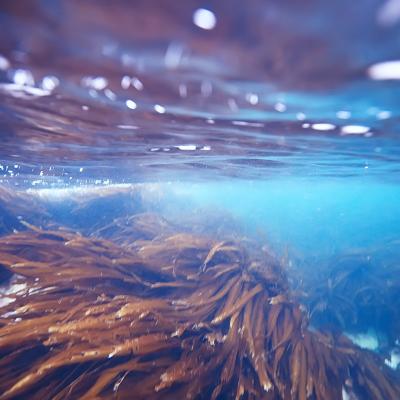
  • Select and validate species of green, brown, and red macroalgae: Ulva, Codium, Alaria, Saccharina, Gracilaria, Palmaria, and Porphyra for high-value applications, considering both their biotechnological and ecological potential.  
  • Design and validate at demo-scale innovative and scalable macroalgae cultivation systems, both onshore and offshore, tailored to different EU marine environments, aiming at maximising resource and energy efficiency. 
  • Develop and upscale to demo-level sustainable and cost-efficient biomass conditioning and processing into high-value bio-products and ingredients, following a zero-waste approach.  
  • Formulate and validate three B2B (polysaccharide-rich extract, peptide-rich extract, and fibre-rich extract) and two B2C (tapas box and hydrogel panel) seaweed-based products. 
  • Assess the environmental, social, and safety impacts of the project value chains through integrated life cycle sustainability assessment, biodiversity footprint analysis, and environmental safety monitoring. 
  • Ensure transferability and replication of project innovations across sectors and regions through tailored business models, stakeholder co-creation, and cross-sector engagement (public authorities, industry, and citizens) to support new value chain generation. 
  • Contribute to the EU blue bioeconomy by clustering with other EU initiatives and feeding project datasets and best practices into open repositories and platforms to raise awareness and foster adoption. 

  • Increase sustainable macroalgae production capacity and improve nutrient uptake in coastal waters. 
  • Advance innovative seaweed-based production for the food, cosmetics, and biomaterials sectors. 
  • Strengthen the EU seaweed value chain by identifying and validating ≥80 native green, brown, and red species, establishing eight hatchery protocols. 
  • Develop resource- and energy-efficient cultivation systems, with ≥30% energy savings, ≥50% renewable energy integration, and digital tools supporting sustainable offshore farming. 
  • Implement zero-waste marine biorefinery processes, reaching ≥70–80% extraction yields for polysaccharides and peptides (≥90% purity), ≥90% recycling of liquid streams, and >95% transformation of solid subproducts. 
  • Reduce GHG emissions by 40%, save up to 80% of freshwater use, and cut fossil energy by 60% compared to benchmarks. 
  • Enhance coastal ecosystems, conducting ≥8 biodiversity monitoring campaigns, reporting ≥5 ecosystem-level indicators per site, and enabling >25% increase in benthic species through restoration activities. 
  • Support the blue economy and job creation, safeguarding ≥25 jobs, developing business models for three farm scales, and engaging ≥30 stakeholders through co-creation and policy dialogues. 
  • Promote knowledge transfer and policy uptake, publishing ≥9 open datasets and collaborating with ≥5 EU initiatives to support replication and impact.

Consortium map

Project coordination

  • ASOCIACION DE INVESTIGACION DE INDUSTRIAS CARNICAS DEL PRINCIPADO DE ASTURIAS Norena, Spain

Consortium

  • HALODERMA APS Esbjerg, Denmark
  • Moluscos Castells Sociedad Limitada Deltebre, Spain
  • NIDO CONSTRUCTECH SL MADRID, Spain
  • CER GROUPE Aye, Belgium
  • UNIVERZITA TOMASE BATI VE ZLINE Zlin, Czechia
  • ACUICULTURA DEL DELTA SOCIEDAD LIMITADA L'AMETLLA DE MAR, Spain
  • Algabrava S.L. Barcelona, Spain
  • POSEIDONADA SL Esplugues de Llobregat, Spain
  • ARCTIC SEAWEED AS Flekkefjord, Norway
  • ZERO EMISSIONS ENGINEERING BV Den Haag, Netherlands
  • Havsmag ApS Rudkobing, Denmark
  • Pure Algae Denmark ApS Grenaa, Denmark
  • Sp/F TARI Tórshavn, Faroe Islands
  • KERTEMINDE SEAFARM APS Munkebo, Denmark
  • CENTRO INTERDISCIPLINAR DE INVESTIGACAO MARINHA E AMBIENTAL MATOSINHOS, Portugal
  • F6S EU TECH INNOVATION NETWORK DAC DUBLIN, Ireland
  • CELIGNIS LIMITED Limerick, Ireland
  • CENTRE NATIONAL DE LA RECHERCHE SCIENTIFIQUE CNRS PARIS, France
  • ZURCHER HOCHSCHULE FUR ANGEWANDTE WISSENSCHAFTEN WINTERTHUR, Switzerland
  • MUNGO MURPHY'S SEAWEED CO. LIMITED GALWAY, Ireland
  • AUTORIDAD PORTUARIA DE GIJON Gijon, Spain