Publication date:
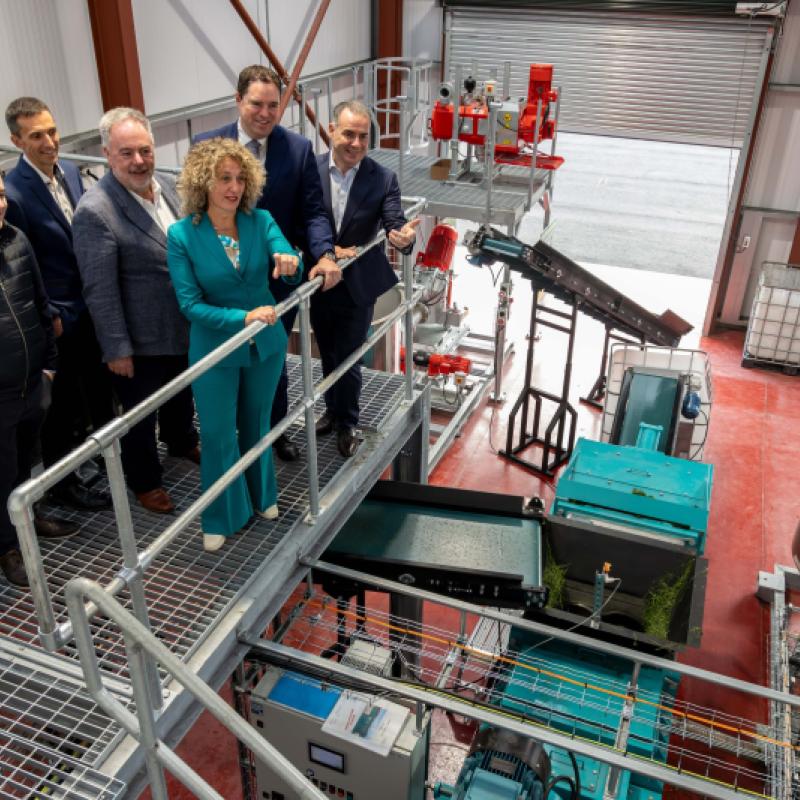
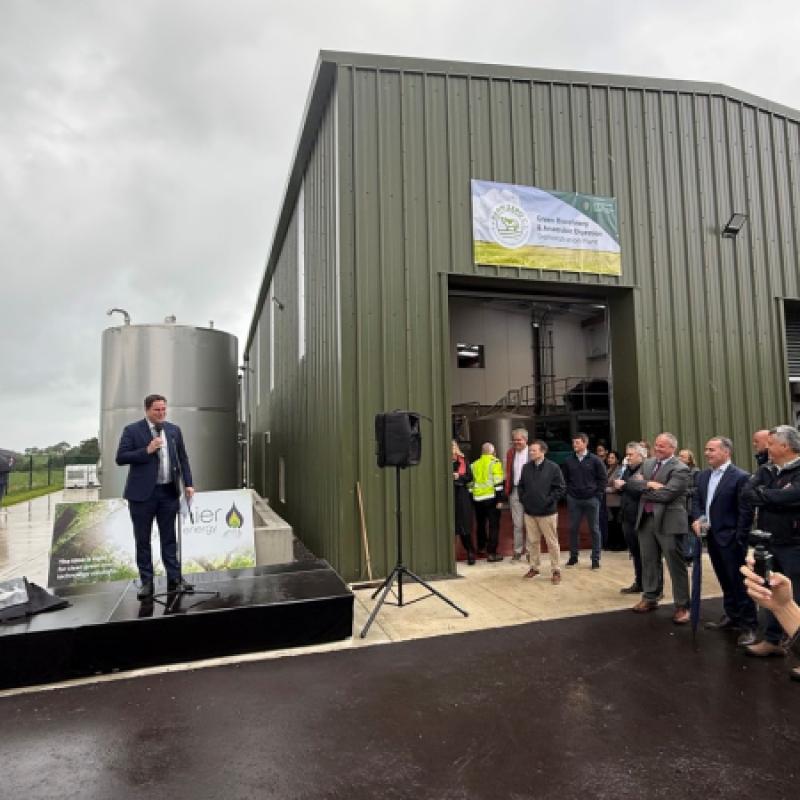
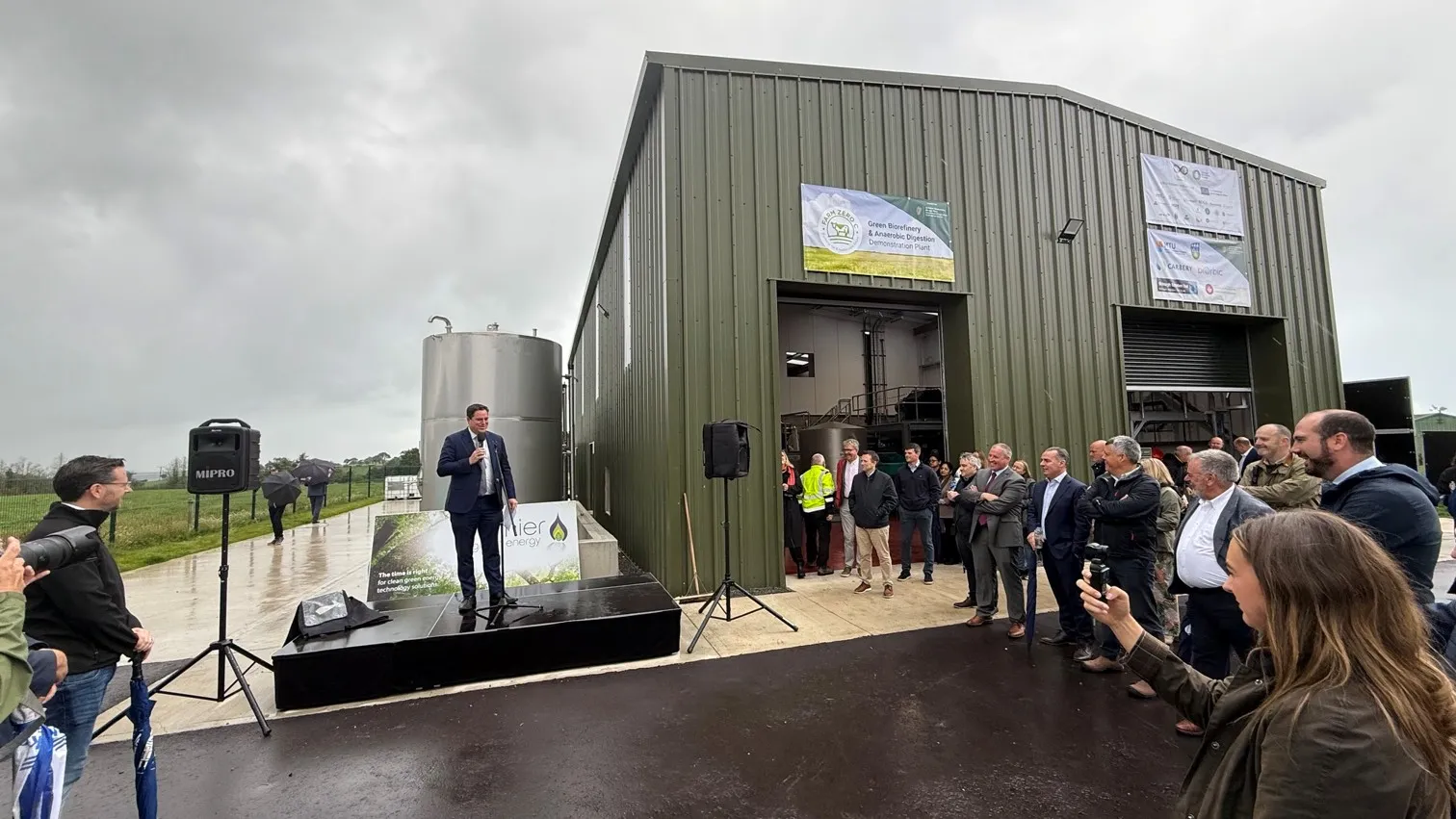
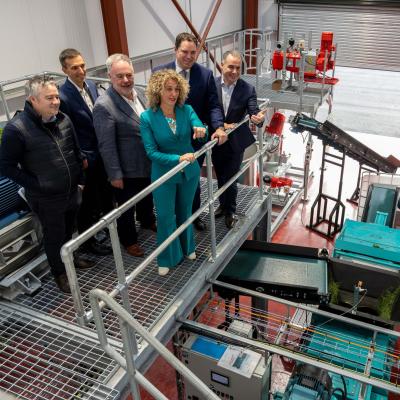
Ireland’s first on-farm demonstration-scale biorefinery integrating grass biorefining and anaerobic digestion was inaugurated in Cork, Ireland, today. Funded by Ireland’s Department of Agriculture, Food and the Marine, the €3 million facility will serve as the Irish demonstration site for Rural BioReFarmeries, which receives approximately €7.35 million in CBE JU funding.
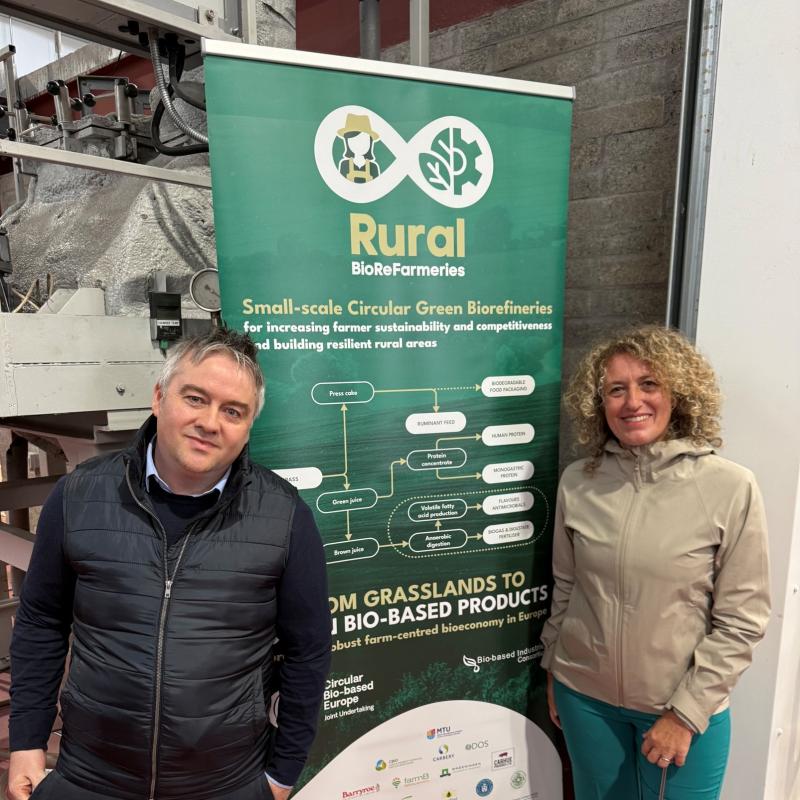
Coordinated by Munster Technological University (MTU), Rural BioReFarmeries brings together 19 partners from eight countries to test a farmer-centred, small-scale biorefinery model under real farming conditions and assess its potential for replication across Europe’s grassland regions.
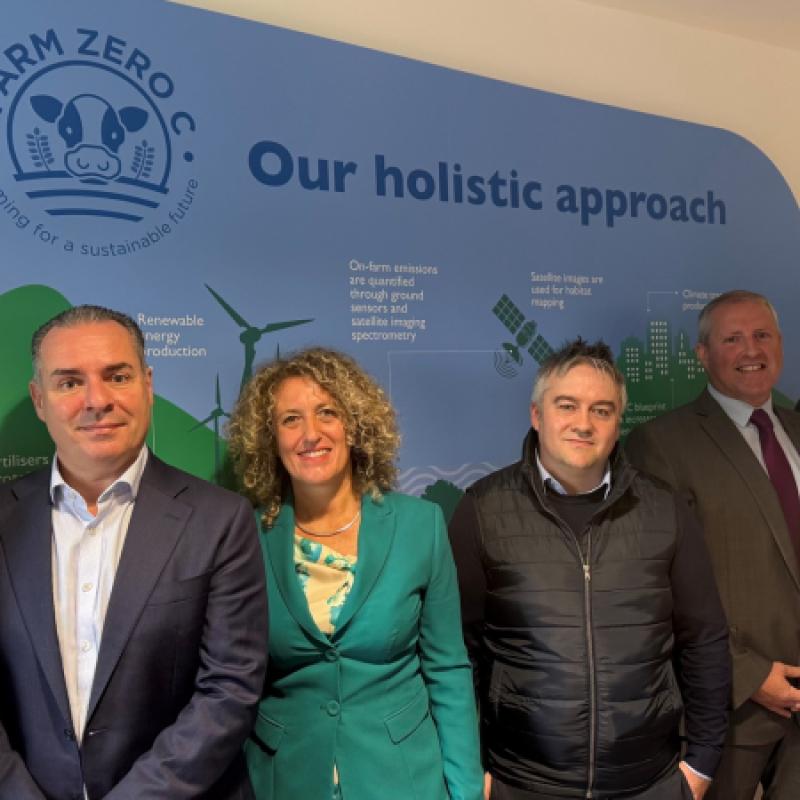
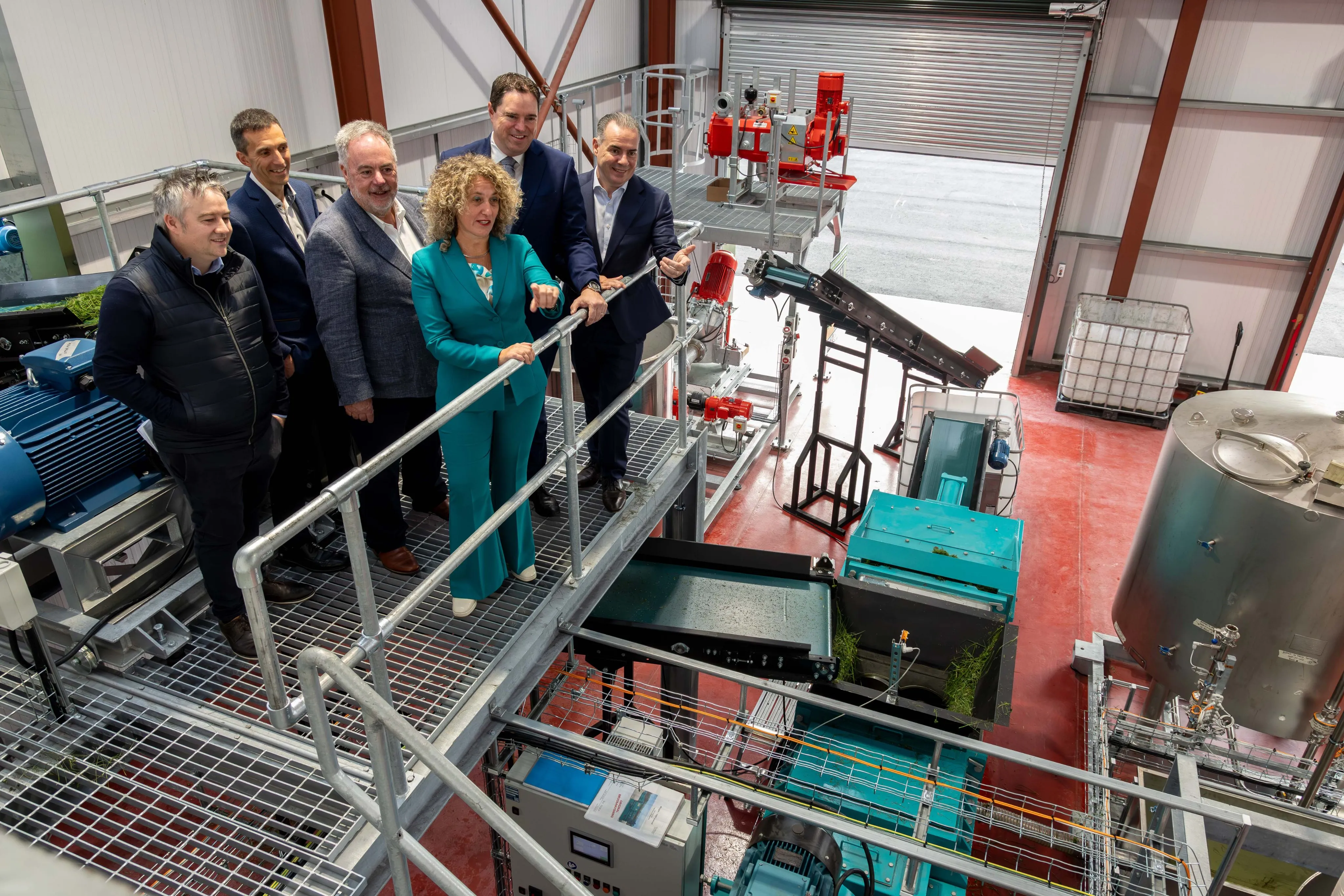
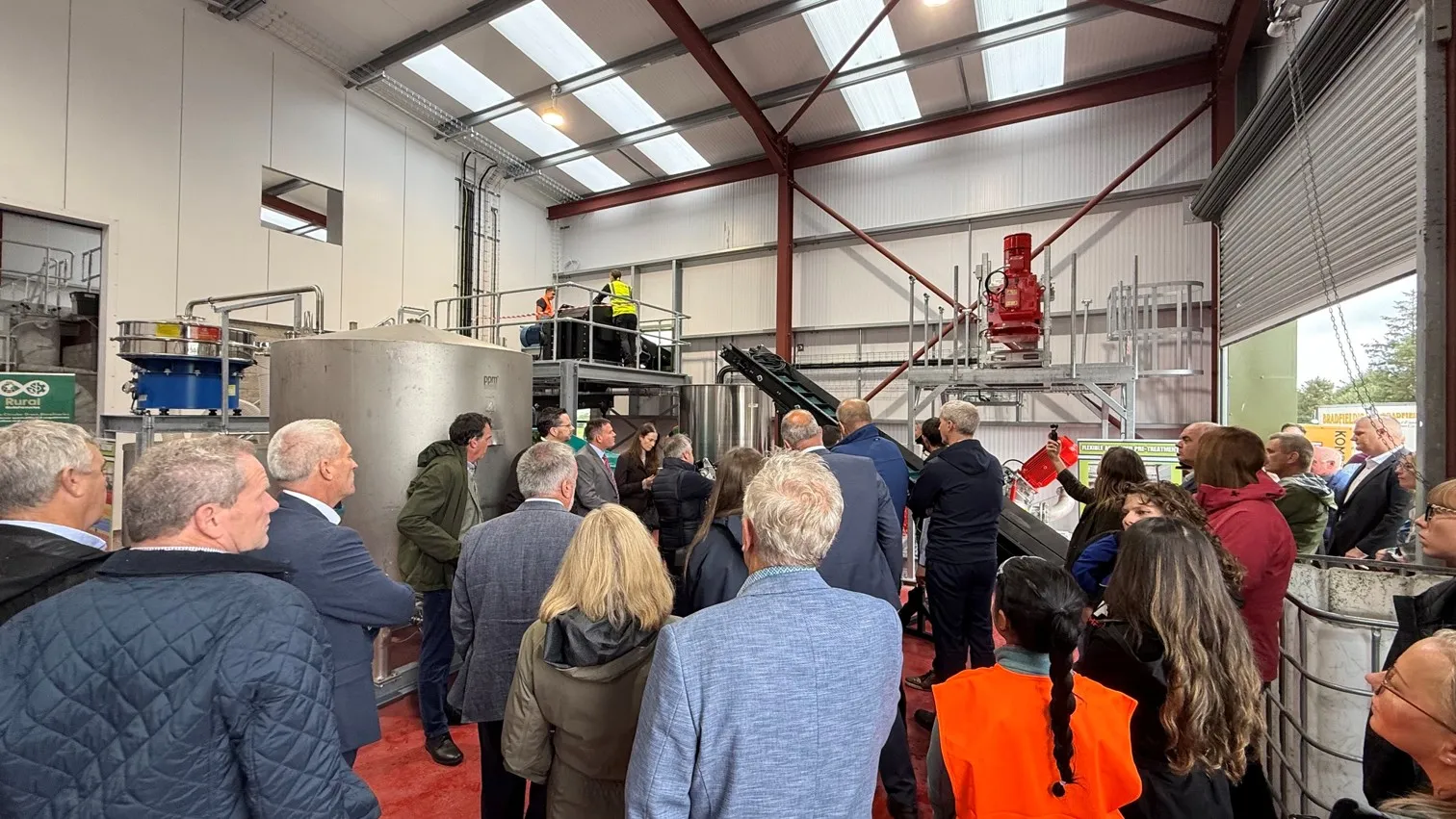
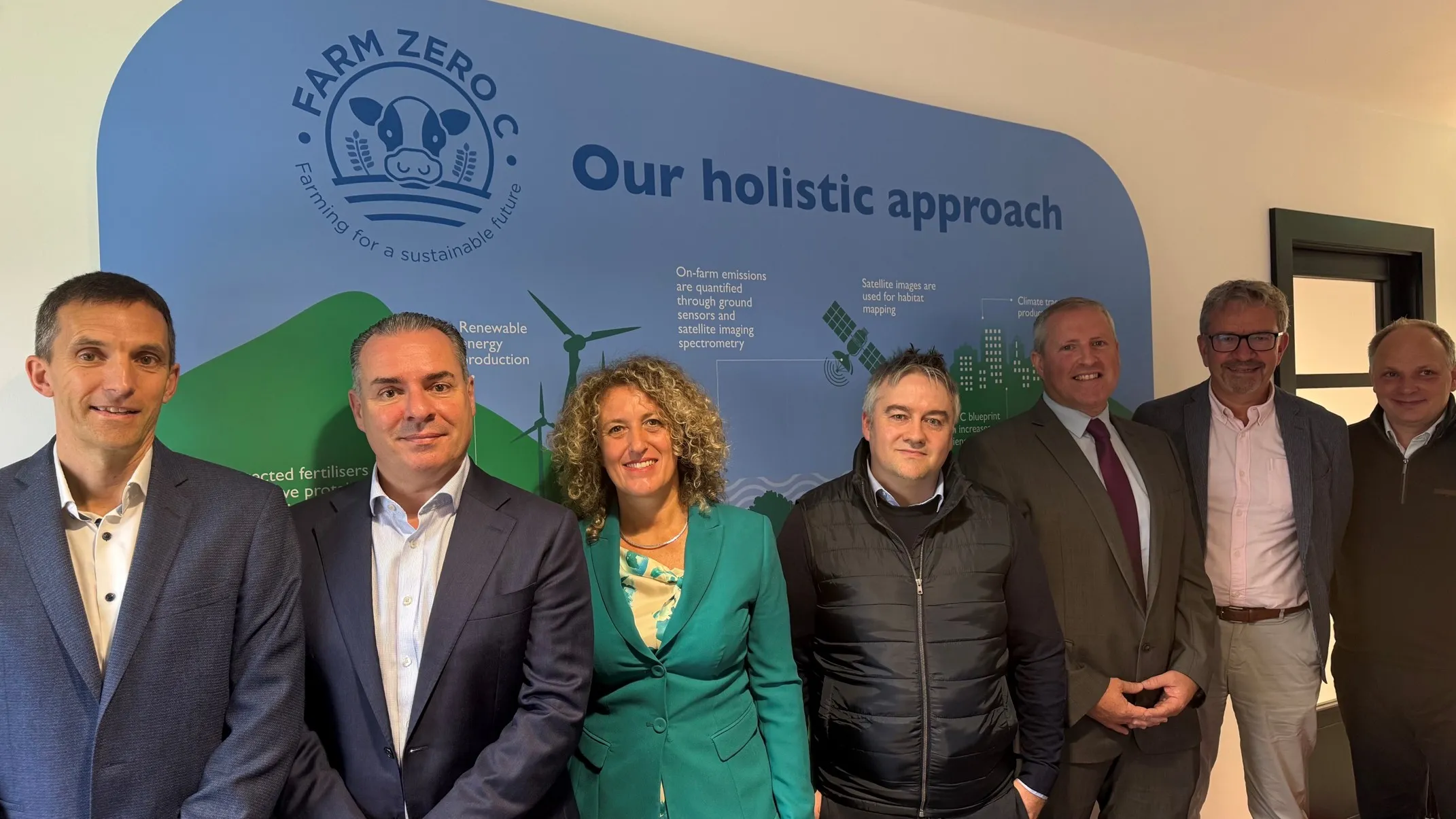
The inauguration was led by Ireland’s Minister for Agriculture, Food and the Marine, Martin Heydon, at Farm Zero C, located at Shinagh Estates Demonstration Farm near Bandon in West Cork. Virginia Puzzolo, Head of Programme at CBE JU, joined representatives of public authorities, research organisations, industry and the farming community.
Held during Ireland’s Presidency of the Council of the EU, the inauguration highlighted how coordinated European and national investment can strengthen the competitiveness and resilience of rural bioeconomies.
Highlighting the potential benefits for farmers, Minister Heydon said:
Instead of just using grass for one purpose, animal feed, this facility will show at a pre-commercial level how we can make further use of our grass and open up new business models and income streams for our grassland farmers.
Martin Heydon, Minister for Agriculture, Food and the Marine
National infrastructure supporting European demonstration
The national and CBE JU investments have distinct but complementary roles. The Irish Government funded the demonstration infrastructure, while CBE JU supports the validation of the model and its wider deployment.
This facility shows how European funding and national investments can work together to bring bio-based innovation to demonstration scale. Through the CBE JU-funded Rural BioReFarmeries project, partners are testing a small-scale, farmer-centred green biorefinery model under real farming conditions and assessing its potential for replication in other European grassland regions.
Virginia Puzzolo, Head of Programme, CBE JU
Testing the model under real farming conditions
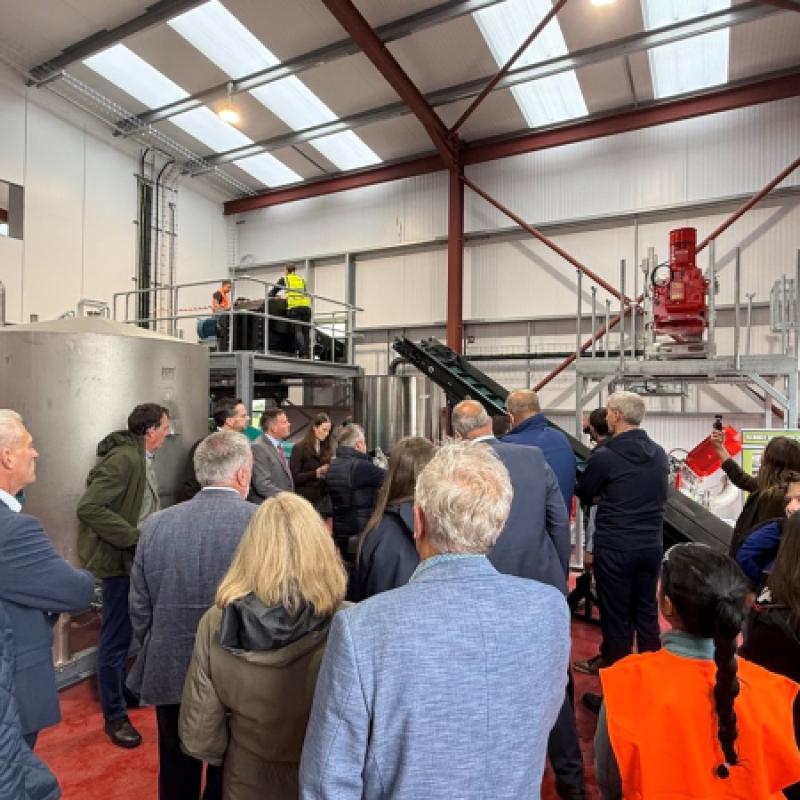
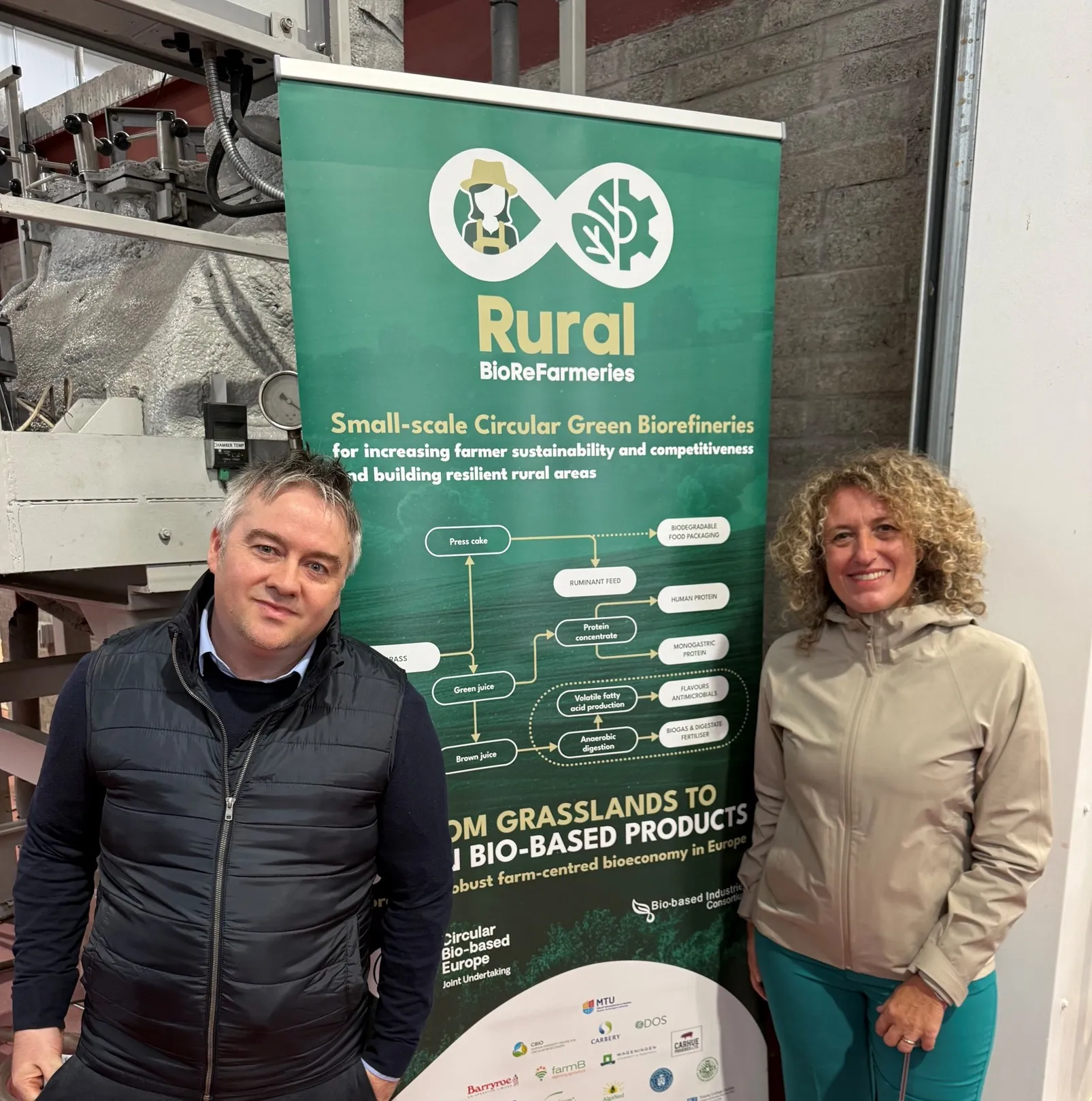
The facility is designed to process fresh grass through mechanical fractionation, separating a fibre-rich press cake from grass juice.
The fibre fraction can be used for livestock feed but will also be evaluated for other material applications. Protein and other valuable components can instead be recovered from the liquid fraction for feed and other potential ingredients for food applications, subject to further development and regulatory assessment. Remaining streams can be directed to anaerobic digestion to produce renewable energy and nutrient-rich digestate, with potential for use as a bio-based fertiliser subject to applicable requirements.
James Gaffey, coordinator of Rural BioReFarmeries, outlined how the consortium will use the site:
This facility gives Rural BioReFarmeries the conditions needed to move beyond pilot-scale testing. With CBE JU support, partners will assess technical performance and product quality in a working farm environment. The evidence will help determine whether the model can operate viably and what farmers and cooperatives need to adopt it in practice.
James Gaffey, Rural BioReFarmeries project coordinator, Munster Technological University and BiOrbic
Using grass to strengthen Europe’s protein supply
Grass is a widely available but underused European resource. Biorefining can recover protein and other bio-based ingredients from grass while retaining a fibre fraction suitable for ruminant feed. Demonstrating this approach at scale could contribute to strengthening the EU’s strategic autonomy, while helping farmers and cooperatives generate more value locally from available biomass.
The work also supports the EU Protein Action Plan, which recognises CBE JU’s role in strengthening Europe’s protein supply, reducing import dependence and supporting more resilient food and feed systems.
Evidence generated in Cork will inform future deployment in other European grassland regions. This connects a concrete Irish investment with European collaboration while contributing to stronger rural economies and more efficient resource use.
Inauguration
(5) medias