SUSFERT_©TimacAgro
Publication date:
Bio-based fertilisers developed through CBE JU-funded projects are gaining ground as Europe looks for long-term answers to rising fertiliser costs, strengthening domestic production and reducing Europe’s dependency on imports. As the European Commission announces new measures aimed at supporting farmers facing rising fertiliser costs and supply chain strains, the case for bio-based alternatives developed in Europe has never been stronger.
The European Commission's Fertiliser Action Plan comes against a backdrop of ongoing geopolitical instability and energy market disruption, which have kept fertiliser prices unusually high and reinforced concerns about Europe's dependence on imported fossil-based fertilisers. The contribution of CBE JU to this challenge is recognised in the Action Plan, which emphasises sustainable and locally sourced bio-based fertiliser solutions, positioning its work as a driving force in Europe’s long-term strategy to reduce such dependencies. In this context, the Fertiliser Action Plan includes:
- A targeted support package via the Common Agricultural Policy (CAP) to sustain farm operations and cash flow,
- Guidance for Member States to strengthen eco-schemes and agri-environment-climate measures, including improved fertilisation efficiency and greater uptake of recycled nutrients,
- Launch an EU fertilisers value chain Partnership between fertiliser producers, farmers and Member States to provide predictability, stability and facilitate cooperation across the value chain,
- A consolidated EU knowledge package, including Horizon Europe results on bio-based fertilisers and related innovations.
Cohesion policy instruments are also being mobilised to strengthen regional fertiliser value chains through investments in wastewater and biowaste treatment, nutrient recovery systems and the deployment of bio-based fertilisers derived from organic residues, biogas streams and secondary raw materials, while also supporting SMEs, skills development and innovation capacity across the sector.
CBE JU-funded projects are already developing circular alternatives to conventional fertilisers, transforming organic waste streams, agricultural residues and industrial by-products into bio-based fertilisers and soil improvers. These solutions aim to recover essential nutrients such as nitrogen, phosphorus and potassium and return them to agricultural use in more circular forms, reducing reliance on imported chemical fertilisers and fossil-based production processes. Several ongoing and completed projects illustrate this approach in practice:
LANDFEED is developing new bio-based fertilisers by valorising underutilised waste streams from the agro-food sector (food waste from the HORECA sector) and urban sources (such as sludge from wastewater treatment plants). The project is demonstrating solutions across the value chain, contributing to soil health restoration and biodiversity enhancement in line with the EU Soil Strategy, while developing scalable business models to support replication and uptake across European regions.
CBE JU-funded projects such as LANDFEED are advancing next-generation bio-based fertilisers and biostimulants from renewable feedstocks. These solutions improve nutrient-use efficiency, soil health and water retention, while enhancing crop resilience and supporting a gradual shift away from fossil-based inputs.
Dr. Marta Aranguren, researcher at Neiker, LANDFEED project
ReLEAF is developing fertilisers from a range of secondary raw materials, including sewage sludge and agri-food residues, contributing to nutrient recovery and reduced reliance on imported inputs. ReLEAF will demonstrate suitable extraction and processing technologies across five sites in Europe, while engaging stakeholders to support acceptance, regulatory alignment and future industrial-scale deployment of bio-based fertilisers in European agriculture.
Through innovative nutrient recovery technologies and new circular value chains, ReLEAF helps reduce environmental impacts while strengthening the resilience and sustainability of European agriculture.
Dr. Carlos Andecochea – ReLEAF’s scientific coordinator
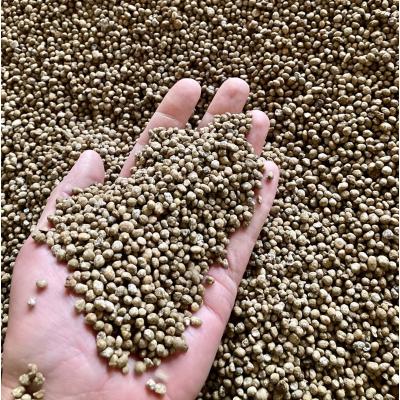
SUSFERT developed multifunctional bio-based fertilisers for phosphorus and iron supply, replacing non-renewable and synthetic sources with sustainable alternatives. The project reduced non-renewable phosphorus in fertilisers by 40%, eliminated synthetic controlled-release coatings and chelates, and produced four new compound fertilisers, designed to integrate into existing production processes and EU agricultural practices.
NewFert addressed one of Europe's most pressing resource challenges by transforming biowaste into secondary raw materials for the fertiliser industry. The project developed and designed technologies to close gaps in nutrient recovery, creating a new circular value chain that reduces reliance on virgin inputs and strengthens the competitiveness of Europe's bio-based economy.
Bio-based fertilizers are a key element in strengthening the resilience of European agricultural systems, as they help reduce dependence on imported inputs and improve soil health in the long term.
Javier Brañas Lasala, R&D Director at GrupoFertiberia, NewFert project
The Action plan also calls on measures to increase the competitiveness and uptake of plant bio-stimulants. ZELDA contributes to the broader goal of reducing Europe's dependence on synthetic chemical inputs and aims to provide more sustainable crop protection solutions that help reduce crop losses while supporting more resilient food production systems.
ZELDA will generate critical evidence on how biobased products contribute to soil health, evaluating their benefits and risks for soil functions, structure, and biodiversity, while also considering potential impacts on surrounding ecosystems such as water bodies.
Prof. Susana Loureiro, University of Aveiro, ZELDA project
These initiatives highlight the role of circular bio-based alternatives in addressing both environmental objectives and supply chain vulnerabilities in Europe’s agricultural sector. As the policy landscape continues to evolve, CBE JU brings together industry, research organisations, SMEs and primary producers to accelerate the development and deployment of innovative circular bio-based solutions across Europe.