FUNGUSCHAIN
Valorisation of mushroom agrowastes to obtain high value products
Valorisation of mushroom agrowastes to obtain high value products
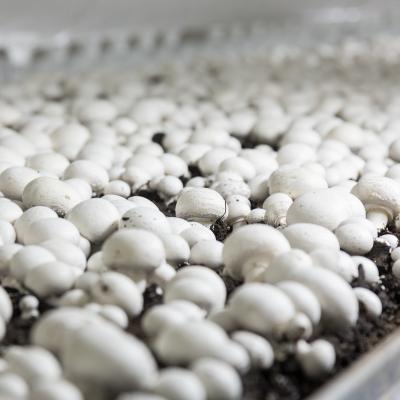
Commercial mushroom cultivation generates substantial amounts of residual biomass, including stems and other offcuts that are often underused despite containing valuable compounds. These residues offer a renewable source of proteins, chitin, glucans and lipids, which can be recovered and transformed into ingredients for food, cosmetics and bio-based materials.
The FUNGUSCHAIN project developed an integrated biorefinery approach to make better use of this resource. Using a cascading process, it extracted different components from mushroom waste and converted them into a range of higher-value products. These included protein-rich ingredients for food supplements, chitosan for cosmetic applications, and functional additives for biodegradable and recyclable plastics.
To demonstrate the industrial potential of this approach, the project established a biorefinery and adapted existing manufacturing processes and production lines. It also tested the recovered compounds in three main value chains: food supplements, plastic products and industrial films, including applications such as bags and gloves. FUNGUSCHAIN demonstrated how agricultural by-products can become valuable secondary raw materials. Its work supported more resource-efficient production, reduced reliance on fossil-based ingredients and opened new opportunities for circular bio-based value chains in Europe.
Agro-residue valorisation: demonstrate an integrated process for converting agro-residues from industrial mushroom cultivation into bio-based functional additives and biopolymers.
Industrial-scale implementation: demonstrate the industrial viability of the process by establishing a new biorefinery and adapting existing industrial production lines.
Results
Innovative extraction processes: developed flexible, scalable and environmentally friendly extraction methods to recover valuable compounds, including proteins, chitin, glucans and lipids, from industrial mushroom waste.
First-of-its-kind biorefinery: built a dedicated biorefinery and validated the new extraction processes, demonstrating their technical feasibility and economic potential.
High-value food ingredients: produced high-protein powder for food supplements and recovered lipids and beta-glucans for use in functional food applications.
Bio-based ingredients for cosmetics: converted chitin recovered from mushroom residues into chitosan, a natural antioxidant with potential to replace fossil-based preservatives in cosmetics.
Biodegradable and recyclable plastics: developed a glucan-based antioxidant for bioplastic films and recovered additional compounds suitable for producing recyclable bioplastics, including materials that replaced petroleum-derived ingredients.
Impacts
Circular economy and waste management: promoted innovation in agricultural waste management by establishing circular business models for the valorisation of agro-residues.
New bio-based products: defined, demonstrated and validated at least five new product types, including food supplements, cleaning products, commercial masterbatches, plasticisers and industrial films.
Improved sustainability and cost efficiency: enhanced the environmental performance and cost efficiency of the resulting bio-based products.
Stronger industrial innovation capacity: strengthened the ability of industries and SMEs to participate in innovative research and develop new solutions for agricultural waste valorisation.
Funguschain project video introduction