FIRST2RUN
Flagship demonstration of an integrated biorefinery for dry crops sustainable exploitation towards biobased materials production
Flagship demonstration of an integrated biorefinery for dry crops sustainable exploitation towards biobased materials production
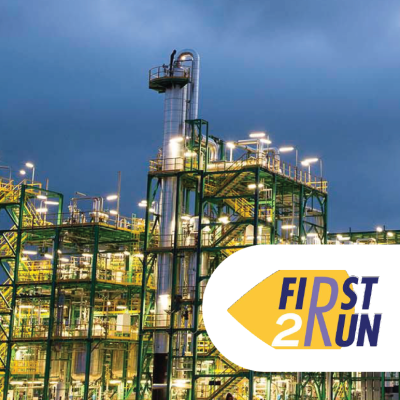
The FIRST2RUN project demonstrated the environmental sustainability and economic profitability of a first-of-its-kind integrated biorefinery. Low-input, underutilised oil crops such as cardoon, grown in arid and marginal lands without competing with food or feed, were valorised for extracting vegetable oils. Through the integration of chemical and biotechnological processes, these oils were then converted into bio-based monomers, mainly pelargonic and azelaic acids, and esters. These served as building blocks for high-value products such as bio-based lubricants, cosmetics, plastics and additives.
By extracting cardoon seed oil and converting it into bio-based solutions such as lubricants and plastics, Novamont played a crucial role in transforming arid and marginal lands in Sardinia into a platform for sustainable bio-based business. Cardoon cultivation was successfully established at large scale, involving around 80 farmers through a Framework Agreement with Coldiretti. Additional low-impact oil crops, including safflower and high-oleic sunflower, were also assessed, while optimised low-input cultivation protocols and dedicated training activities reached around 170 farmers. The project also introduced agricultural innovations, including improved cardoon hybrids, harvesting equipment and monitoring methodologies, contributing to more efficient and sustainable crop production.
The project successfully demonstrated the production of bio-based azelaic and pelargonic acids at flagship scale, with a plant capacity of approximately 25,000 tonnes/year, alongside bio-based cosmetic and lubricant esters. Furthermore, the valorisation of the remaining cardoon biomass for bioenergy and protein-rich meal for animal feed enabled the development of an integrated approach to resource efficiency and circularity. The environmental benefits of the FIRST2RUN agro-industrial value chain were also quantified, with estimated reductions of approximately 63% in Global Warming Potential and 46% in Non-Renewable Energy Resources compared with conventional value chains producing benchmark products.
FIRST2RUN developed an innovative and replicable Multipurpose Circular Farm concept, fostering cooperation between farmers, bio-based industries, SMEs and start-ups and creating opportunities to diversify agricultural activities and generate new income in marginal areas. The project established a sustainable, circular business model that valorises local agricultural resources and residues without competing with valuable land for food production.
Industrial-scale sustainability: demonstrate the technological, economic and environmental sustainability, at industrial scale, of processing underutilised oil crops into bio-based monomers and esters that are further transformed into products such as bio-based lubricants, cosmetics and plastics.
By-and co-products: valorise by-and co-products for feed products, added-value chemicals and energy.
Certification and market uptake: certify and standardise the developed products and processes, and facilitate their market penetration and social acceptance.
Results
Cardoon value chain: developed a comprehensive set of innovations across the entire cardoon value chain, from cultivation to industrial conversion and product formulation, including a new harvesting prototype that improved efficiency and reduced manual labour.
Feedstock and oil extraction: created a mechanical and chemical extraction process for vegetable oil from cardoon seeds, which also generated oil suitable for animal feed, and developed new cardoon hybrids with improved oil quality and higher yield, supporting feedstock availability for biorefineries.
Green chemistry and materials: formulated low-impact catalysts for converting vegetable oils into renewable building blocks, developed innovative bio-based plastics, including mulching films and food packaging, and validated pelargonate esters for biolubricants and cosmetic formulations, demonstrating their industrial versatility.
Rural cooperation: established a framework agreement with farmers’ associations, creating a win-win cooperation model linking agriculture and industry, and generated positive socio-economic impacts by stimulating rural employment, creating new technical skills and strengthening regional green industry capacity.
Porto Torres plant: reconverted a former fossil-based industrial plant in Porto Torres into a bio-based production facility, symbolising the regional transition to green chemistry.Contributed to the definition of new business models to diversify business opportunities in the farming context, using the multipurpose circular farm as an example.
Impacts
Farmer training: engaged around 170 farmers in training sessions on new oil crops and the application of innovative bio-based products for agriculture from the FIRST2RUN value chain, enhancing their knowledge and skills.
Stakeholder dialogue: fostered dialogue with key actors by promoting the project and the related biorefinery model at over 150 national and international events, including conferences, workshops, seminars and exhibitions, reaching more than 9,000 stakeholders.
Large-scale cardoon cultivation: promoted the establishment of large-scale cardoon crops, involving approximately 80 farmers, through an agreement with the agriculture organisation Coldiretti.