GreenProtein
Revalorisation of vegetable processing industry remnants into high-value functional proteins and other food ingredients
Reducing food-processing waste and strengthening Europe's protein supply are two important challenges for the EU bioeconomy. Europe relies heavily on imported protein for food and feed, while large quantities of vegetable residues remain underused despite their potential as a source of valuable plant proteins. At the same time, green vegetable residues contain valuable proteins that are often underused. One of these is RuBisCo, a naturally occurring plant protein with functional properties that make it suitable for food applications.
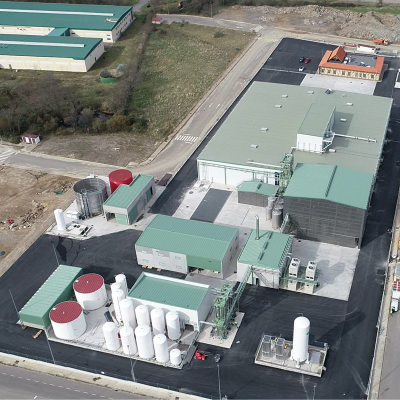
The GreenProtein project aimed to turn this untapped resource into high-value food ingredients by recovering and purifying functional, food-grade RuBisCo from residues generated by the vegetable processing industry, particularly sugar beet leaves. It developed and operated a demonstration plant to optimise the extraction process and support its scale-up, with the ambition of processing around 4,000 tonnes of agricultural residues annually into high-quality protein powder.
The resulting RuBisCo offers potential as a plant-based alternative to ingredients such as egg white and whey protein, thanks to its gelling, foaming and emulsifying properties. The project also investigated alternative vegetable feedstocks to address the seasonal availability of sugar beet residues and advanced the regulatory and market preparation needed for commercialisation.
Green residue valorisation: develop a process to convert green residue raw materials into valuable food ingredients.
Industrial-scale protein production: process 1,500 kg of green residues per hour to produce 28 kg of RuBisCo protein powder per hour.
Functional food ingredient development: obtain protein with gelling, foaming and emulsifying properties for use in different food applications.
Market development: address growing demand for high-protein, vegan and halal food products by developing a promising alternative plant-based protein ingredient.
Results
Scale-up of RuBisCo extraction: adapted and optimised the extraction process through pilot-plant testing, leading to the design, construction and operation of a dedicated demonstration plant from 2019.
Functional protein production: successfully extracted functional RuBisCo from sugar beet leaves and other vegetable residues, obtaining protein with valuable gelling, foaming and emulsifying properties.
Alternative feedstock validation: identified and tested alternative crops and vegetable residues to address the seasonal availability of discarded sugar beet leaves.
Market and regulatory progress: attracted interest from food industry stakeholders, initiated contacts with potential customers and submitted a novel food dossier to EFSA to support future commercialisation.
Stakeholder engagement and dissemination: presented the project at more than ten events across EU countries and engaged industry and the public through promotional activities, a project video, social media and the project website.
Impacts
Reduced agricultural waste: helped vegetable agri-food industries make better use of green residues, reducing waste and supporting more efficient resource use.
New bio-based value chain: demonstrated an integrated biorefinery process and created opportunities to bring higher-value products to new markets.
Improved resource valorisation: showed the potential to convert more than 40% of the raw material into high-value additives, increasing the overall value recovered from agricultural crops.
Greater economic and environmental efficiency: aimed to improve production costs and environmental performance compared with existing alternatives.
Rural development and employment: created opportunities for higher revenues from agricultural residues, with products valued at two to five times more than their current applications, supporting rural businesses and jobs.